USCG-approved Advanced Shiphandling
Sea School's Advanced Shiphandling course is approved by the U.S. Coast Guard and satisfies the advanced ship handling training requirements for STCW endorsement as Master or Chief Mate at the management level. It is built on IMO Model Course 7.01 and delivered in accordance with NVIC 13-14, Guidelines for Approval of Training Courses and Programs.
USCG-approved Advanced Shiphandling
Sea School's Advanced Shiphandling course is approved by the U.S. Coast Guard and satisfies the advanced ship handling training requirements for STCW endorsement as Master or Chief Mate at the management level. It is built on IMO Model Course 7.01 and delivered in accordance with NVIC 13-14, Guidelines for Approval of Training Courses and Programs.
Locations
Train from Anywhere with Sea School Courses – Learn at Your Own Pace
Train on your schedule with Sea School’s self-paced online courses. Designed for flexibility and convenience, our online programs allow you to complete key certifications and knowledge-based training from anywhere, at any time.
A trainee successfully completing this course would satisfy professional competency and regulatory requirements. Specifically, any mariner who successfully completes the course will satisfy the training requirements of 46CFR11.305(a)(3)(i) and 46CFR11.307(a)(3)(i) for STCW endorsements of Master or Chief Mate on vessels 3000GT or more; and 46CFR11.311(a)(3)(i), 46CFR11.313(a)(3)(i) for STCW endorsements of Master or Chief Mate on vessels of 500GT or more and less then 3000GT. 72 Hours (9 Days)
A trainee successfully completing this course would satisfy professional competency and regulatory requirements. Specifically, any mariner who successfully completes the course will satisfy the training requirements of 46CFR11.305(a)(3)(i) and 46CFR11.307(a)(3)(i) for STCW endorsements of Master or Chief Mate on vessels 3000GT or more; and 46CFR11.311(a)(3)(i), 46CFR11.313(a)(3)(i) for STCW endorsements of Master or Chief Mate on vessels of 500GT or more and less then 3000GT. 72 Hours (9 Days)
Upcoming Zoom Trainings
Join our courses from anywhere with our convenient Zoom sessions. Choose the dates that work best for your schedule and start your journey toward earning your next license or endorsement - without ever leaving home.
This Course Has Other Options for Learning
The Right Course for Every Seafarer
What Our Clients Say
Outstanding staff and comfortable classroom.
One of the best instructors I had with perfect English language. I learned a lot more than I expected.

Ricardo G.
It’s a great setting with awesome staff.
The instructor is outstanding and the course is informative.
Dean D.
Great instructor, strongly recommend!
Jarrad A.
Best instructors I’ve had.
Instructor was a great teacher, and made the class fun and enjoyable.
Gavin A.
Excellent instructor.
Very adept at answering questions and ensures requirements are met. Great sea stories and experience.
James C.
Nice and very sweet office staff, I enjoyed meeting everyone.
Always an awesome time being at Sea School!
David A.
Highly recommend it.
The staff, classroom, instructors and the course is very professional.
Richard G.
Course is very informative.
Very experienced instructor, easy to talk to. Overall great experience and enjoyable.
Joseph D.
Office staff is always great.
Superb instructor and course has good material.
Kenneth G.
I loved the instructor, he is amazing.
The proctor was excellent too.
Kathleen H.
Good course and good classroom.
Loved the instructor and his knowledge.
Abigail L.
Instructor was so helpful in instructing the rules and safety of boats.
Simple class, easy to understand and loved the pictures so helpful.
Noa A.
The course is very informative.
The instructor was incredibly knowledgeable with plenty of examples and stories.
Haley D.
Instructor was amazing and very insightful to boating knowledge.
Learned a lot of information in this course.
Griffin K.
I have no complaints and I am super satisfied with my class.
Very helpful for the rules of the water. Instructor is super knowledgeable and clearly cares about the art of seamanship.
James H.
Good customer service from the staff.
Professional and knowledgeable instructor. Classroom is clean and adequate.
Arturo B.
Very good instructor.
Excellent communications from the staff.
James H.
Everything was top notch.
I found the instructor to be very knowledgeable in this course.
Donald D.
Great staff and clean classroom.
Instructor is great and also the course.
Mark D.
The course is very enjoyable.
The instructor is very nice to everyone and is knowledgeable. Clean and cool classroom and friendly staff.
Joseph G.
Office staff were very nice.
Instructor did a good job teaching and I love this course.
Mainor C.
Very good course.
Top notch instructor and very experienced instructor.
James D.
Comfortable classroom, well set up to exhibit course very well.
Very knowledgeable, helpful and courteous instructor and staff.
Gerorge B.
Instructor is friendly and very knowledgeable.
Excellent sea stories related to the subject.
Mark L.
Always helpful and accommodating staff.
Highly recommend it. Instructor is uniquely skilled at teaching. Kudos!
Patrick H.
John is very knowledgeable and informative!
Cody C.
Nice office staff.
Clean Classroom. Awesome instructor. Great course. Great food.
Cameron G.
Classroom was a great environment!
Instructor was extremely knowledgeable.
Anthony G.
John is the best teacher I’ve personally had at Sea School.
Knowledgeable and didn’t beat around the bush.
Trenton F.
Great office staff and classroom.
Lots of respect for the instructor. Taught very well!
Nicholas H.
I enjoyed John’s teaching.
Very to the point and sharp.
Cade B.
Very helpful office staff.
Great learning environment. Very knowledgeable and great instructor. Tremendous course! Delicious food!
Noah A.
Staff are professional and extremely helpful.
Instructor is extremely knowledgeable and made the painful course easy for us.
Charles G.
The very best staff.
Will return for any future class needs. Instructor is a great man with a wealth of knowledge.
Gabriel C.
Thank you.
Great job from everyone involved.
Jacob C.
Everyone was nice and very good to help with every problem that I had.
Aaron H.
Classroom is clean.
They provided everything we needed to learn the course. Instructor’s a great guy, super knowledgeable with great stories.
Jacob H.
Friendly office staff.
Instructors were very helpful.
Walter C.
Knowledgeable good instructors.
Instructors were good, reassuring and informative.
Kyle K.
Best staff I have ever met.
Classroom was nice and the course was very meaningful. Instructor is very intelligent.
Leland K.
Classroom is comfortable.
Instructor and staff were awesome and amazing.
Patrick C.
Excellent knowledge from the instructor.
She will make you learn.
Dustin B.
Instructor did not cut corners in teaching this class.
Very clear and straight to the point. Awesome teacher.
Garrison G.
Office staff is easy to deal with.
Friendly and helpful instructor.
Peter F.
Instructor was awesome.
I look forward to another class.
Dimecio D.
Office staff is a ten.
Informative course and clean classroom.
Sara H.
Amazing office staff.
Fun classroom. Awesome instructor. Fun course. Great food.
Hal E.
Great sea stories.
Excellent instruction.
Christopher M.
Instructor is very knowledgeable and passionate about teaching.
Thank you for all the help and for putting up with me.
Phillip C.
Instructor is very helpful and very good at teaching and knowing how to get you to understand.
Jarrett F.
Helpful and friendly staff.
Instructor did a good job and also an eye opening course.
Robert F.
Instructor is informative and the course is very detailed.
Helpful staff and clean classroom.
Carlos K.
Friendly and professional staff.
Instructor is knowledgeable and very willing to assist. I have enjoyed this experience and will be back for upgrades.
Darien H.
Excellent class.
All information was covered and a great instructor.
Jim C.
Pat is a great instructor!
John C.
Accommodations were perfect.
The cleaning staff do an amazing job.
Robert D.
Awesome office staff.
Awesome classroom. Awesome instructor. Awesome course. Awesome food. Awesome accommodations.
Ryan A.
Great office staff!
Instructor is a funny guy. Knows his stuff!
Austin C.
Thank you! I appreciate everything.
Trevan B.
Everything was excellent.
Dylan B.
Nice & helpful office staff.
Very helpful instructor. Excellent accommodations.
Alfonso L.
Well done!
David C.
Very good experience.
George J.
Office staff went above & beyond.
Instructor has relevant and real life experiences or storeis told.
Jacob H.
Amazing!!!
Drake B.
Office staff was great.
Pat did an excellent job and I loved his stories. As always, eggs were fantastic.
John C.
Food is delicious and prepared on time!
Pat is the best instructor to walk the earth and sail the 7 seas, he deserves a red porsche for a company vehicle.
David R.
Awesome office staff.
Nice and cool classroom. Awesome food!
Ryan A.
Instructor was helpful & stayed until our questions got answered.
Timothy H.
I enjoyed just about everything.
Instructor was super knowledgeable and I really enjoyed hearing all his sea stories.
John G.
Super sweet office staff.
Instructor stories keep you entertained and he knows his stuff! Chef is great. More cookies!
Austin C.
Excellent office staff. Awesome instructor!
Demetrios D.
Amazing across the board!
Shone H.
Great food!
Great stories and very knowledgeable instructor.
Ben C.
People are great!
Awesome classroom. Instructor really inspired me. Food was great.
Justin M.
Learned a lot - thanks guys!!!
Everyone from the Sea School personnel are very nice and knowledgeable. Classroom was very neat and clean.
Allen C.
Enjoyed having Capt. John as my instructor. Meals provided were good and enough!
David D.
Excellent instruction from experience.
Jeremy H.
Office staff was friendly and accommodating.
Classroom was clean, in a good state, comfortable. Instructor was experienced, approachable, friendly, and helpful.
Jonathan A.
Great, knowledgeable instructor, good stories.
Food was wonderful and unexpected!
Charles G.
John is amazing at what he does and I greatly appreciate him being my instructor!
Devin H.
Very helpful office staff.
Classroom was clean and organized. Instructor was a good guy. Overall, the course was good and I learned a lot about ships.
Amar A.
Office staff were very nice & helpful!
The course had good information and was easy to understand. Good instructor. Helps any way he can.
Steven J.
Gave clear instructions and presented the material in a relatable manner.
Ian M.
All excellent! Thank you!
Ramon H.
Great, very friendly and helpful office staff.
Instructor was very engaged in the course. Overall, great course!
Grant D.
Welcoming staff! Great instructor.
Hayes E.
Great knowledge & brought real world knowledge to class.
Christopher D.
Thank you!
Instructor was great and didn’t mind me asking any of my questions. I was nervous, but he made me feel comfortable.
Jayme H.
Great office staff!
Awesome classroom. Awesome instructor. Very good course.
Jason E.
Great instructor!
Very knowledgeable.
Ryan M.
I highly recommend!
Pat did a fine job.
Michael G.
Very enlightening course.
Great folks! Awesome instructors.
Aaron H.
Amazing people.
Course is straightforward and very informative.
Brendon K.
Informative course and instructor is very good as his experience teaches us knowledge.
Kevin D.
Instructor made the class very understandable.
This is my third time attending this school and the staff are always helpful and nice.
Dave C.
Great staff and instructor worked hard to help me in every way possible.
Gorki H.
Great instructors take the time to actually teach and help you learn everything that's needed.
Elijah C.
Thank you!
Office staff went out of their way to help me out.
Jonathan B.
Everything was good and the instructor was excellent.
Jaequavius J.
Why Thousands of Mariners Choose Sea School?
Each year, over 7,500 students choose Sea School for their maritime training. We offer 30+ USCG-approved courses across in-person, online, and satellite formats, with training available at 6 locations nationwide. Team training is also available on-site or via satellite to meet company needs.




We’ve developed comprehensive, engaging, and practical curriculum to set you up for success on the water
While the curriculum represented on the Sea School website is a general layout of course information, it is not the exact order in which lessons are taught.
- Maneuvering to pilot stations and embarking or disembarking pilots, with due regard to weather, tide, head reach and stopping distances
- Handling a ship in rivers, estuaries and restricted waters, accounting for current, wind and restricted-water effects on helm response
- Application of constant rate-of-turn techniques
- Use of, and maneuvering in and near, traffic separation schemes and vessel traffic service (VTS) areas
- The importance of navigating at reduced speed to avoid damage from your own bow and stern waves
- Maneuvering to pilot stations and embarking or disembarking pilots, with due regard to weather, tide, head reach and stopping distances
- Handling a ship in rivers, estuaries and restricted waters, accounting for current, wind and restricted-water effects on helm response
- Application of constant rate-of-turn techniques
- Use of, and maneuvering in and near, traffic separation schemes and vessel traffic service (VTS) areas
- The importance of navigating at reduced speed to avoid damage from your own bow and stern waves
- Maneuvering in shallow water, including reduction of under-keel clearance caused by squat, rolling and pitching
- Interaction between passing ships, and between own ship and nearby banks
- Maneuvering in shallow water, including reduction of under-keel clearance caused by squat, rolling and pitching
- Interaction between passing ships, and between own ship and nearby banks
- Docking and undocking under varying wind, tide and current, with and without tugs
- Ship and tug interaction
- Use of propulsion and maneuvering systems
- Choice of anchorage; anchoring with one or two anchors in limited anchorages; determining scope; anchoring in deep water
- Dragging anchor and clearing a fouled anchor
- Dry-docking, both with and without damage
- Docking and undocking under varying wind, tide and current, with and without tugs
- Ship and tug interaction
- Use of propulsion and maneuvering systems
- Choice of anchorage; anchoring with one or two anchors in limited anchorages; determining scope; anchoring in deep water
- Dragging anchor and clearing a fouled anchor
- Dry-docking, both with and without damage
- Management and handling of ships in heavy weather, including assisting a ship or aircraft in distress
- Towing operations; keeping an unmanageable ship out of the trough; lessening drift; use of oil
- Precautions when maneuvering to launch rescue boats or survival craft in bad weather
- Methods of taking survivors on board from rescue boats and survival craft
- Management and handling of ships in heavy weather, including assisting a ship or aircraft in distress
- Towing operations; keeping an unmanageable ship out of the trough; lessening drift; use of oil
- Precautions when maneuvering to launch rescue boats or survival craft in bad weather
- Methods of taking survivors on board from rescue boats and survival craft
- Actions before a collision
- Damage control
- Emergency steering
- Emergency towing
- Beaching a vessel
- Grounding a vessel
- Refloating a grounded vessel
- Actions before a collision
- Damage control
- Emergency steering
- Emergency towing
- Beaching a vessel
- Grounding a vessel
- Refloating a grounded vessel
- Determining the maneuvering and propulsion characteristics of common ship types, with reference to stopping distances and turning circles at various draughts and speeds
- Practical measures for navigating in or near ice, and in conditions of ice accumulation on board
- Determining the maneuvering and propulsion characteristics of common ship types, with reference to stopping distances and turning circles at various draughts and speeds
- Practical measures for navigating in or near ice, and in conditions of ice accumulation on board
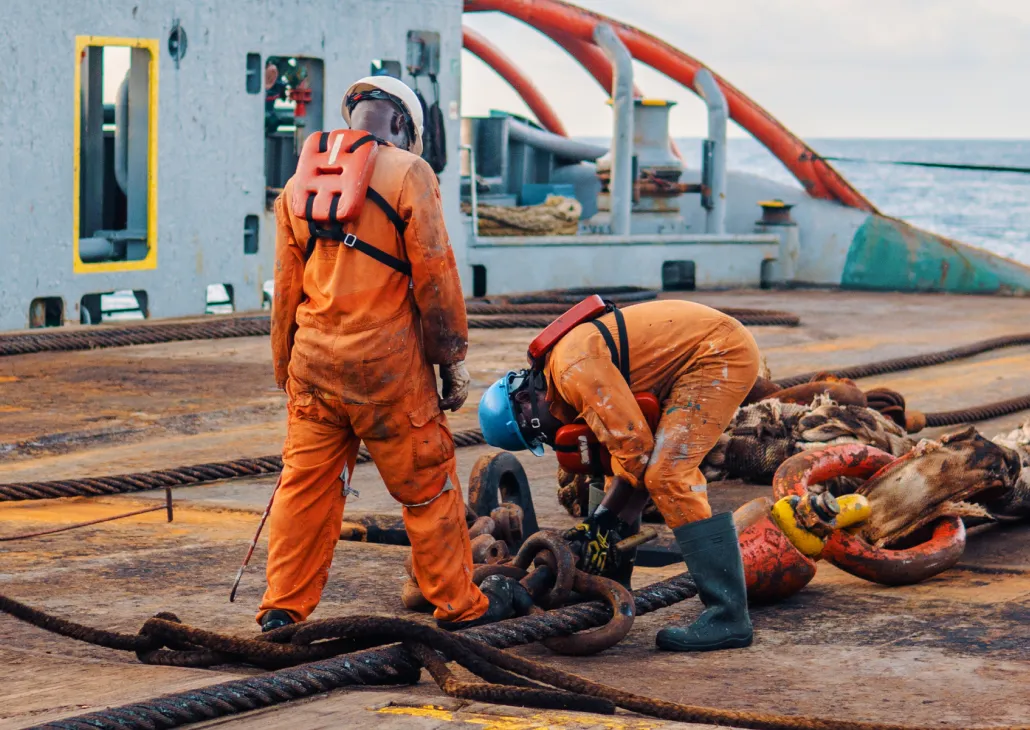
Team Trainings
Sea School provides comprehensive team training solutions designed to meet your organization's unique requirements. Our certified instructors are available for on-site training at your location, or your team can utilize our dedicated training facilities. Please contact us for further details regarding our corporate training opportunities.
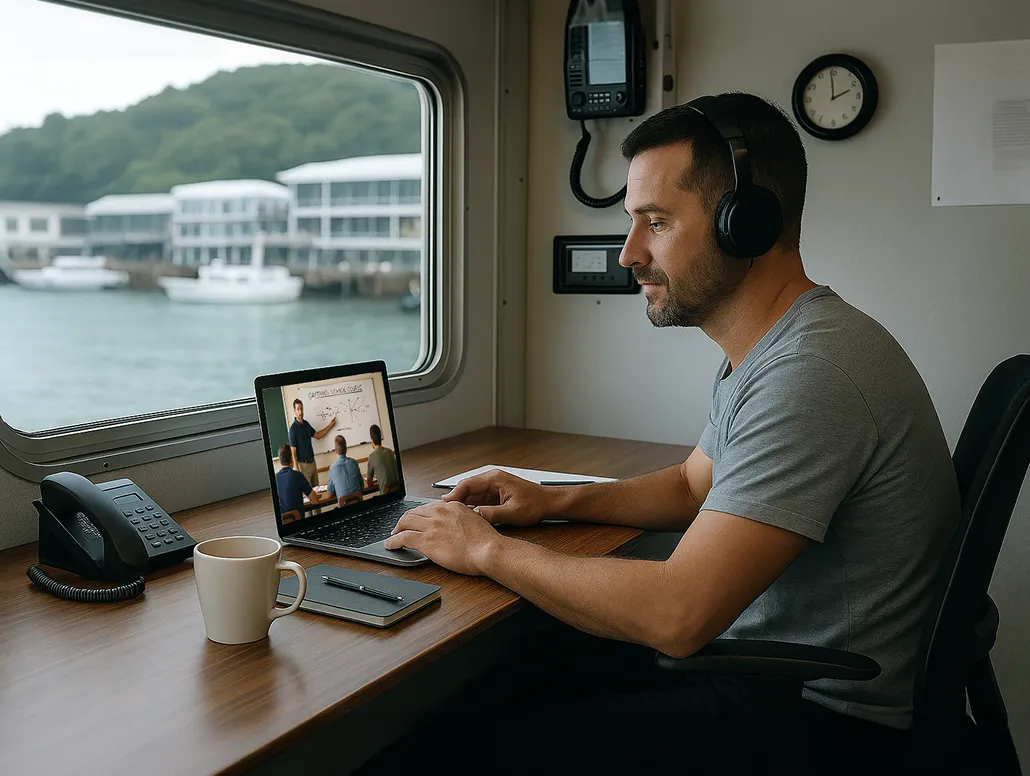
Online Trainings
Looking to obtain your next license at your own pace? Sea School offers a selection of immersive online courses designed to provide you with convenient access to our high-quality course material. Explore our online options and contact us with any questions you may have.
A Simple 3-Step Process to Get Certified and Start Your Maritime Career
Choose Your Course
Pick the course that fits your experience level and sea time and select the available format that works for you (in-person, Zoom, or online).
Enroll & Prepare
Register online or at a Sea School location. Ensure you meet eligibility requirements and start reviewing the provided study materials.
Get Certified
After finishing the course, you will need to submit your application to the Coast Guard to receive your Merchant Mariner Credential (MMC).
Advance your Maritime Career
What Our Clients Say
Course Comparison
Advanced Shiphandling Prerequisites
Who Should Take This Course
Advanced Shiphandling is designed for mariners with existing shiphandling experience as Officer in Charge of a Navigational Watch on vessels of 500 GT or more.
Prerequisite: completion of a Basic Shiphandling course — such as Sea School's Basic Shiphandling & Steering Control Systems — or equivalent sea service experience.
Advanced Shiphandling FAQs
72 hours of instruction over nine days, combining classroom sessions with full-mission bridge simulator time.
Yes. You need a Basic Shiphandling course or equivalent shiphandling experience as OICNW on vessels of 500 GT or more. Sea School's Basic Shiphandling & Steering Control Systems course satisfies the prerequisite.
Basic Shiphandling covers the fundamentals of vessel maneuvering and steering control systems at the operational level. Advanced Shiphandling is a management-level course: it addresses command-level decision making in restricted waters, heavy weather, casualty response and tug-assisted berthing, and it satisfies the STCW training requirement for Master and Chief Mate endorsements.Basic Shiphandling covers the fundamentals of vessel maneuvering and steering control systems at the operational level. Advanced Shiphandling is a management-level course: it addresses command-level decision making in restricted waters, heavy weather, casualty response and tug-assisted berthing, and it satisfies the STCW training requirement for Master and Chief Mate endorsements.
Master and Chief Mate of vessels of 3,000 GT (ITC) or more, and Master and Chief Mate of vessels of 500 GT (ITC) or more and less than 3,000 GT — both at the management level.
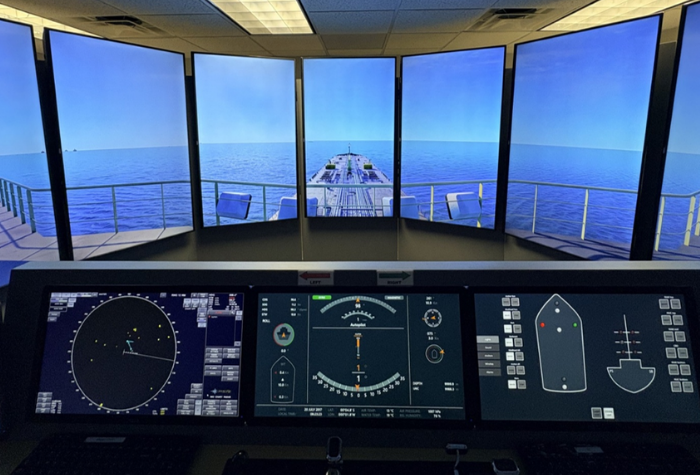
Yes. A significant portion of the 72 hours is spent on a full-mission bridge simulator with hydrodynamic and weather modeling, radar/ARPA, ECDIS, GMDSS, and conventional and Z-drive controls.
Four, maximum. The student-to-instructor ratio never exceeds 4:1 for lectures, exercises or assessments.
It’s Time to Start Your Maritime Career!
Helping thousands of mariners every year, Sea School is a leader in the maritime education space. Whether you are new to the industry or looking to add onto your Merchant Mariner Credential, find the courses right for you at Sea School.