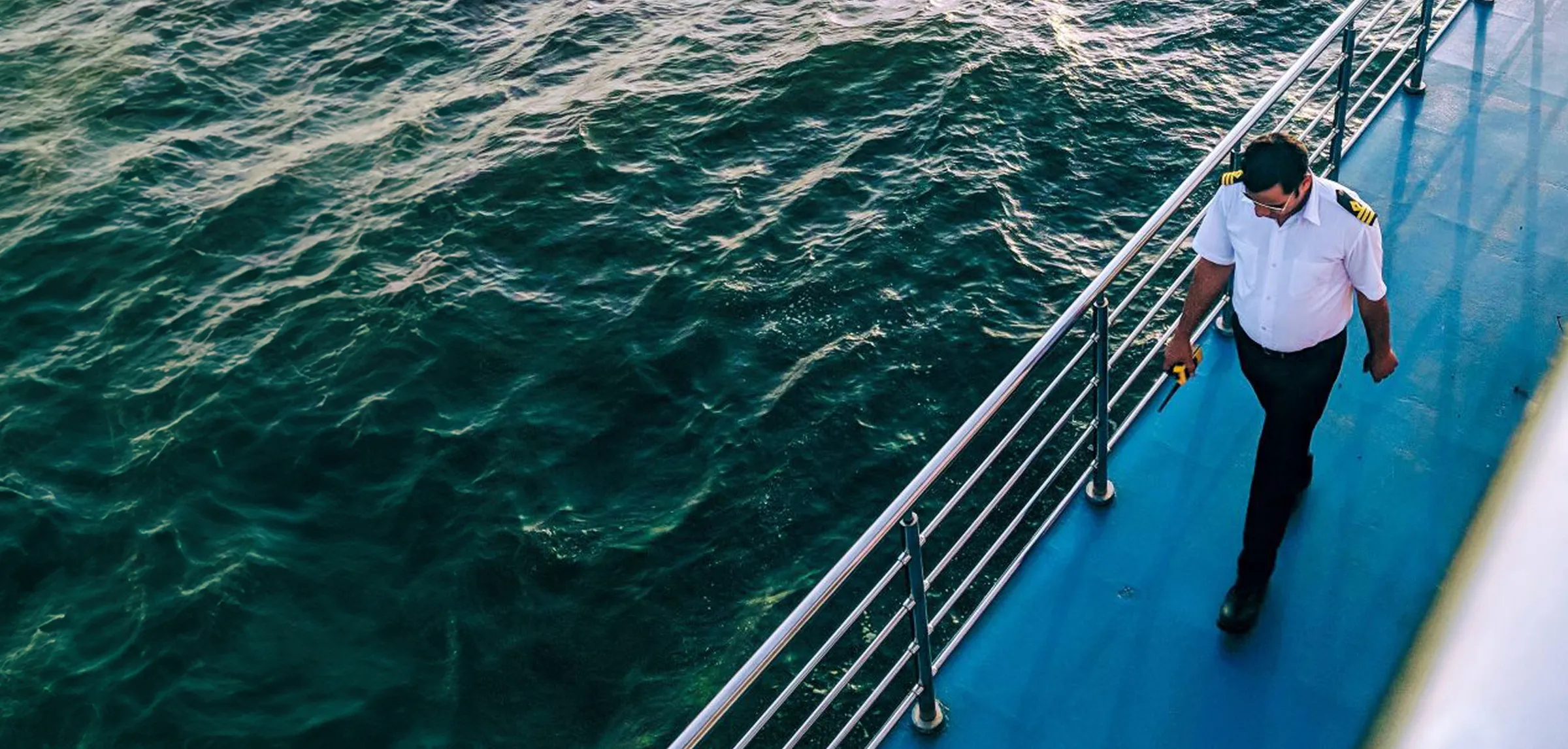
USCG-Approved Advanced Shiphandling
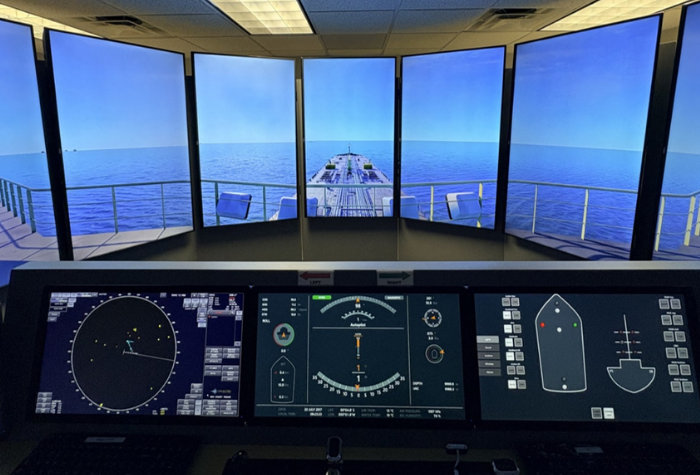
Sea School's USCG-Approved Advanced Shiphandling course is a 9-day course that mixes classroom instruction with full-mission bridge simulator practice and assessments. We cap this course at 4 students. Spots fill fast so book now or call us to learn more.
Why Thousands of Mariners Choose Sea School?
Each year, over 7,500 students choose Sea School for their maritime training. We offer 30+ USCG-approved courses across in-person, online, and satellite formats, with training available at 6 locations nationwide. Team training is also available on-site or via satellite to meet company needs.




A trainee successfully completing this course would satisfy professional competency and regulatory requirements. Specifically, any mariner who successfully completes the course will satisfy the training requirements of 46CFR11.305(a)(3)(i) and 46CFR11.307(a)(3)(i) for STCW endorsements of Master or Chief Mate on vessels 3000GT or more; and 46CFR11.311(a)(3)(i), 46CFR11.313(a)(3)(i) for STCW endorsements of Master or Chief Mate on vessels of 500GT or more and less then 3000GT. 72 Hours (9 Days)

Successful completion of Sea School's Advanced Shiphandling course satisfies:
- The Advanced Shiphandling training requirements of 46 CFR 11.305(a)(3)(i) and 11.307(a)(3)(i) for STCW endorsement as Master or Chief Mate of vessels of 3,000 GT (ITC) or more (Management Level); and
- The Advanced Shiphandling training requirements of 46 CFR 11.311(a)(3)(i) and 11.313(a)(3)(i) for STCW endorsement as Master or Chief Mate of vessels of 500 GT (ITC) or more and less than 3,000 GT (Management Level); and
- The Advanced Shiphandling standards of competence required by 46 CFR 11.305(a)(2), 11.307(a)(2), 11.311(a)(2), 11.313(a)(2) and 11.315(a)(2), and by STCW Code Section A-II/2 and Table A-II/2, as amended 2010.
The course meets the National Assessment Guidelines from:
- NVIC 10-14(Ch-5) and NVIC 11-14(Ch-5) — Tasks 8.1, 8.2, 8.3, 8.4, 8.5.A, 8.6.A, 8.7.A, 9.1.A, 9.2.A, 9.3.A, 9.4.A, 9.5.A, 9.6.A, 9.6.B [NVIC 10-14(Ch-5) only], 9.7.A, 9.8.A, 9.9.A, 9.9.B, 9.10, 9.11, 9.12, 9.13, 9.14, 9.15, 9.16.A, 9.16.B, 9.17.A
- NVIC 03-18(Ch-4) — Tasks 8.1.A, 8.2.A, 8.3.A, 8.4.A, 8.5.A, 8.6.A, 8.7.A, 9.1.A, 9.2.A, 9.3.A, 9.4.A, 9.5.A, 9.6.A, 9.7.A, 9.8.A, 9.9.A, 9.9.B, 9.10.A, 9.11.A, 9.11.B, 9.11.C, 9.12.A, 9.13.A, 9.14.A, 9.15.A, 9.16.A, 9.16.B, 9.17.A
Why Thousands of Mariners Choose Sea School?
Each year, over 7,500 students choose Sea School for their maritime training. We offer 30+ USCG-approved courses across in-person, online, and satellite formats, with training available at 6 locations nationwide. Team training is also available on-site or via satellite to meet company needs.
Advanced Shiphandling Prerequisites
Who Should Take This Course
Advanced Shiphandling is designed for mariners with existing shiphandling experience as Officer in Charge of a Navigational Watch on vessels of 500 GT or more.
Prerequisite: completion of a Basic Shiphandling course — such as Sea School's Basic Shiphandling & Steering Control Systems — or equivalent sea service experience.
Real-World Expertise
Excellence starts with a strong foundation. We believe in mastering fundamental skills, building confidence, and ensuring every mariner has the knowledge and expertise needed to succeed in their career.
Flexible Learning Options
True leadership is demonstrated through action. We foster a hands-on approach, where mariners learn by doing and gain real-world experience that prepares them for the challenges of the industry.
Career Advancement
In the maritime world, challenges are inevitable - but so are solutions. We encourage proactive thinking, problem-solving, and the courage to take initiative.
Industry-Recognized Certifications
We never settle for mediocrity. Whether in training, leadership, or problem-solving, we strive for the highest standards in everything we do.
A Strong Community & Industry Network
Success in the maritime industry requires a strong work ethic. We embrace a roll-up-your-sleeves mentality, knowing that real growth comes from effort and persistence.
Confidence & Leadership Development
Ttrue professionals must be ready to adapt. We believe in staying agile, embracing change, and continuously expanding our skills to meet new challenges.
We’ve developed comprehensive, engaging, and practical curriculum to set you up for success on the water
While the curriculum represented on the Sea School website is a general layout of course information, it is not the exact order in which lessons are taught.
- Maneuvering to pilot stations and embarking or disembarking pilots, with due regard to weather, tide, head reach and stopping distances
- Handling a ship in rivers, estuaries and restricted waters, accounting for current, wind and restricted-water effects on helm response
- Application of constant rate-of-turn techniques
- Use of, and maneuvering in and near, traffic separation schemes and vessel traffic service (VTS) areas
- The importance of navigating at reduced speed to avoid damage from your own bow and stern waves
- Maneuvering to pilot stations and embarking or disembarking pilots, with due regard to weather, tide, head reach and stopping distances
- Handling a ship in rivers, estuaries and restricted waters, accounting for current, wind and restricted-water effects on helm response
- Application of constant rate-of-turn techniques
- Use of, and maneuvering in and near, traffic separation schemes and vessel traffic service (VTS) areas
- The importance of navigating at reduced speed to avoid damage from your own bow and stern waves
- Maneuvering in shallow water, including reduction of under-keel clearance caused by squat, rolling and pitching
- Interaction between passing ships, and between own ship and nearby banks
- Maneuvering in shallow water, including reduction of under-keel clearance caused by squat, rolling and pitching
- Interaction between passing ships, and between own ship and nearby banks
- Docking and undocking under varying wind, tide and current, with and without tugs
- Ship and tug interaction
- Use of propulsion and maneuvering systems
- Choice of anchorage; anchoring with one or two anchors in limited anchorages; determining scope; anchoring in deep water
- Dragging anchor and clearing a fouled anchor
- Dry-docking, both with and without damage
- Docking and undocking under varying wind, tide and current, with and without tugs
- Ship and tug interaction
- Use of propulsion and maneuvering systems
- Choice of anchorage; anchoring with one or two anchors in limited anchorages; determining scope; anchoring in deep water
- Dragging anchor and clearing a fouled anchor
- Dry-docking, both with and without damage
- Management and handling of ships in heavy weather, including assisting a ship or aircraft in distress
- Towing operations; keeping an unmanageable ship out of the trough; lessening drift; use of oil
- Precautions when maneuvering to launch rescue boats or survival craft in bad weather
- Methods of taking survivors on board from rescue boats and survival craft
- Management and handling of ships in heavy weather, including assisting a ship or aircraft in distress
- Towing operations; keeping an unmanageable ship out of the trough; lessening drift; use of oil
- Precautions when maneuvering to launch rescue boats or survival craft in bad weather
- Methods of taking survivors on board from rescue boats and survival craft
- Actions before a collision
- Damage control
- Emergency steering
- Emergency towing
- Beaching a vessel
- Grounding a vessel
- Refloating a grounded vessel
- Actions before a collision
- Damage control
- Emergency steering
- Emergency towing
- Beaching a vessel
- Grounding a vessel
- Refloating a grounded vessel
- Determining the maneuvering and propulsion characteristics of common ship types, with reference to stopping distances and turning circles at various draughts and speeds
- Practical measures for navigating in or near ice, and in conditions of ice accumulation on board
- Determining the maneuvering and propulsion characteristics of common ship types, with reference to stopping distances and turning circles at various draughts and speeds
- Practical measures for navigating in or near ice, and in conditions of ice accumulation on board
A Simple 3-Step Process to Get Certified and Start Your Maritime Career
Choose Your Course
Pick the course that fits your experience level and sea time and select the available format that works for you (in-person, Zoom, or online).
Enroll & Prepare
Register online or at a Sea School location. Ensure you meet eligibility requirements and start reviewing the provided study materials.
Get Certified
After finishing the course, you will need to submit your application to the Coast Guard to receive your Merchant Mariner Credential (MMC).
What Our Clients Say
What We Provide:
What Students Need to Bring:
Advance your Maritime Career
Advanced Shiphandling FAQs
72 hours of instruction over nine days, combining classroom sessions with full-mission bridge simulator time.
Yes. You need a Basic Shiphandling course or equivalent shiphandling experience as OICNW on vessels of 500 GT or more. Sea School's Basic Shiphandling & Steering Control Systems course satisfies the prerequisite.
Basic Shiphandling covers the fundamentals of vessel maneuvering and steering control systems at the operational level. Advanced Shiphandling is a management-level course: it addresses command-level decision making in restricted waters, heavy weather, casualty response and tug-assisted berthing, and it satisfies the STCW training requirement for Master and Chief Mate endorsements.Basic Shiphandling covers the fundamentals of vessel maneuvering and steering control systems at the operational level. Advanced Shiphandling is a management-level course: it addresses command-level decision making in restricted waters, heavy weather, casualty response and tug-assisted berthing, and it satisfies the STCW training requirement for Master and Chief Mate endorsements.
Master and Chief Mate of vessels of 3,000 GT (ITC) or more, and Master and Chief Mate of vessels of 500 GT (ITC) or more and less than 3,000 GT — both at the management level.
Yes. A significant portion of the 72 hours is spent on a full-mission bridge simulator with hydrodynamic and weather modeling, radar/ARPA, ECDIS, GMDSS, and conventional and Z-drive controls.
Four, maximum. The student-to-instructor ratio never exceeds 4:1 for lectures, exercises or assessments.
Your Journey Begins Here – Get Certified & Get on the Water!
Helping thousands of mariners every year, Sea School is a leader in the maritime education space. Whether you are new to the industry or looking to add onto your Merchant Mariner Credential, find the courses right for you at Sea School.